


The Future of GCC Staffing Models

The traditional Global Capability Center staffing model is dying—and organizations clinging to old approaches risk being left behind.

After nearly three decades in business operations across manufacturing, automotive, and technology sectors, I've witnessed the GCC landscape transform from pure cost arbitrage to strategic value creation. The future belongs to GCCs that build sophisticated staffing models designed for agility, not just efficiency. 🌏
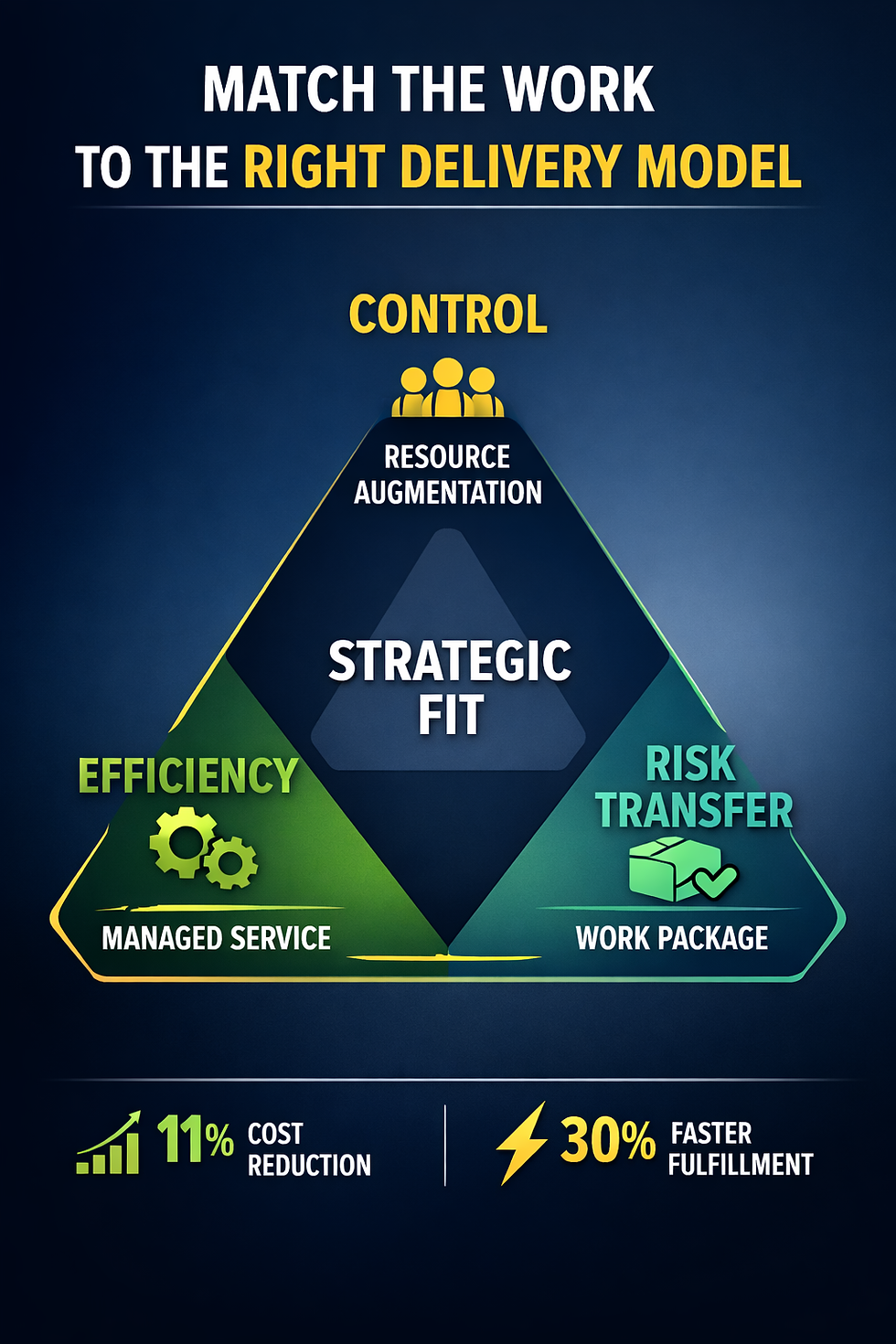
Tomorrow's GCC staffing will blend permanent employees, managed partners, and specialized gig workers in dynamic combinations aligned to business cycles. In my experience managing a 2000M INR sourcing budget, the organizations that embrace this hybrid approach gain both cost advantages and unprecedented flexibility.
Data analytics will drive staffing decisions rather than historical patterns or gut feeling. When we implemented KPI dashboards to measure resource utilization, we improved efficiency by 15% by placing the right skills in the right engagement models at the right time. 📈
The skills required in GCCs are also evolving rapidly. Technical expertise remains important, but "fungible skills" that allow talent to move between domains will become increasingly valuable. I developed a "Skillset Fungibility Index" that helped us identify and cross-train 5% of our deployable bench to meet emerging needs.
Geographic diversification will continue as organizations balance risk, cost, and access to specialized talent pools across multiple locations rather than concentrating in traditional hubs.
How is your organization evolving its GCC staffing approach? Are you still operating with yesterday's models or building for tomorrow's realities?


Comments